
How Much Protein Do You Really Need?
Author: Jian Gao, PhD
Editor: Mr. Frederick Malphurs
October 10, 2026
Protein has become one of the hottest topics in nutrition and social media. Walk into any grocery store and you’ll see protein shakes, protein bars, high-protein yogurt, protein cereal — even protein water. Many people have been led to believe that the more protein they consume, the healthier they will be.
Added confusion is that for decades, the RDA (Recommended Dietary Allowance) for protein set by the National Academy of Medicine (NAM, formerly the Institute of Medicine) is 0.80 grams of protein per kilogram of body weight per day (g/kg/day) for healthy adults. Now, the new USDA Dietary Guidelines for Americans recommends 1.2-1.6 g/kg/day, nearly doubled.
So, which recommendation is correct and how much should we take?
1. Why It’s Important to Understand How Much Protein We Should Eat
Unlike fat and carbohydrates, proteins are not just another nutrient used to build bones and tissues. They are also powerful signaling molecules that regulate many vital functions in the human body. For example, both insulin and GLP-1 are proteins (peptides).
All proteins are strings of amino acids bonded together; proteins are called peptides when the strings of amino acids are shorter. There are only 20 standard amino acids, but the number of possible proteins is astronomical because the properties of proteins — and thus their functions — depend not only on the number of amino acids in the string but also on their order.
In perspective, the average length of a human protein is about 500 amino acids bonded together. With a fixed length of 500 amino acids,1 theoretically, how many different proteins can be built using the 20 amino acids? The answer is 20500 ≈ 3.27 x 10650.
So, how many different proteins are there in the human body? Nobody knows for sure. One theory is that one gene corresponds to one protein. The current estimate is that there are about 20,000 distinct protein-coding genes and, therefore, about 20,000 proteins in the human body.2,3 But other estimates range from 10,000 to several billion, depending on where and how you look at proteins.4,5
This tells us how complex the proteins in our bodies are and how little we know about their exact functions. Therefore, substantially deviating from the normal level of protein intake established over the course of human evolution could have unforeseen consequences.
2. Understand How the RDA Is Estimated
The Nitrogen Balance Test
The RDA of 0.80 g/kg/day recommended by the National Academy of Medicine (NAM) is based on the nitrogen balance (NB) test. So, what is the NB test, and why do researchers measure nitrogen?
Because dietary protein is the only major macronutrient that contains nitrogen, averaging about 16% by weight, measuring nitrogen is essentially a way to track protein. In an NB test, researchers precisely measure the total nitrogen consumed from dietary protein and compare it with the total nitrogen excreted through urine, feces, skin, and sweat.
The RDA of 0.80 g/kg/day was estimated by NAM through a two-step process. The first step was to derive the Estimated Average Requirement (EAR) using the following formula:6
Nitrogen Balance (NB) = Nitrogen Intake − (Urinary Nitrogen + 4 g)
Here, 4 g represents the estimated nitrogen excretion through feces, skin, and sweat.
- Positive balance (NB > 0): Nitrogen intake is higher than nitrogen excretion. This means the body is retaining nitrogen and building or repairing tissue, such as during growth, pregnancy, or muscle recovery.
- Negative balance (NB < 0): Nitrogen excretion is higher than intake. The body must break down its own tissues to provide nitrogen for other, more critical functions.
- Equilibrium (NB = 0): Nitrogen intake equals nitrogen excretion. This is considered a state of nitrogen equilibrium and is used to estimate how much protein the body needs to maintain its tissues.
However, the protein requirement corresponding to NB = 0 can vary from person to person. The EAR was estimated by combining results from many studies, with the resulting population average being:
EAR = 0.66 g/kg/day
However, this is a population average, meaning it would be insufficient for approximately half of the population. To provide enough protein for nearly everyone, in the second step, NAM added two standard deviations to the EAR:
RDA = EAR + 2 × SD = 0.66 + 0.158 = 0.818 g/kg/day
After accounting for the quality of mixed dietary protein, including digestibility and amino acid composition in typical Western diets, NAM established the standard population recommendation of:
RDA = 0.80 g/kg/day
This level is intended to meet the protein needs of approximately 97.5% of the population.
A major criticism of the NB method is the possibility of physiological adaptation. When protein intake is insufficient, the body may adapt by reducing protein use for less critical functions rather than breaking down its own tissues. For example, suppose the body would normally require 1 additional gram of protein when adequate protein is available from food. If dietary protein is insufficient, the body might conserve protein and break down only 0.9 grams of its own tissue to meet its needs. This adaptation could make nitrogen balance appear adequate even when protein intake is lower than the amount needed for optimal health.
As a result, many researchers, including sports nutrition experts, believe that 0.80 g/kg/day may be insufficient, particularly for physically active people and older adults. However, there is no established method for precisely quantifying the effect of this adaptation.
But there is another widely used method that attempts to determine the amount of protein the body actually needs.
The IAAO Method: A Different Way to Estimate Protein Needs
The Indicator Amino Acid Oxidation (IAAO) method is a newer way to estimate how much protein the body needs. Unlike the traditional nitrogen balance test, which measures nitrogen going into and leaving the body, the IAAO method looks at how the body uses amino acids — the building blocks of protein.
The basic idea is easier to understand with an analogy.
Imagine that your body is building a brick house, and the house represents a new protein. To build it, you need several different types of bricks, such as red, blue, yellow, and green. All the necessary bricks must be available at the same time.
If you run out of one type — for example, red bricks — you cannot finish building the house, even if you have plenty of the other colors. The same principle applies to building protein. If one essential amino acid is in short supply, the body cannot efficiently use the other amino acids to make new protein.
So, what happens to the amino acids that cannot be used? The body breaks them down, or oxidizes them, for energy or disposal. During this process, carbon dioxide is produced and eventually released in breath. Researchers can measure this carbon dioxide to determine how many amino acids are broken down, which can be used to determine the amount of protein the body needs.
Here are the IAAO Test’s four-step process:7
- Add a traceable “indicator” amino acid
Researchers give a person a small, harmless amount of an amino acid, usually phenylalanine, that has been labeled with a naturally occurring form of carbon called carbon-13 (¹³C). This label acts like a tracking device, allowing researchers to follow what happens to the amino acid.
- Give different amounts of protein
The person is given different amounts of the protein or amino acid being studied. For example, researchers might test several protein intake levels, from low to high.
- Measure the labeled carbon dioxide in the breath
When protein intake is too low, the body cannot use all the amino acids efficiently to make new protein. More of the indicator amino acid is therefore broken down, producing more ¹³C-labeled carbon dioxide, which can be measured in the person’s breath.
As protein intake increases, the body can use more of the available amino acids including the indictor amino acid to build protein. As a result, less and less of the indicator amino acid is broken down, so less labeled carbon dioxide appears in the breath.
- Find the “breakpoint”
Eventually, a point is reached where the body has built enough protein for its needs and therefore no more amino acids including the indicator amino acids are needed any more. At this point, the downward trend of breaking down the indicator amino acid becomes flat. This is called the breakpoint.
The breakpoint is used to estimate the amount of protein the body needs. In simple terms, it represents the point at which the body has enough protein to support its maximum rate of protein synthesis under the conditions of the test.
This is why the IAAO method provides a different estimate of protein needs from the traditional nitrogen balance test. Rather than asking whether the body is in nitrogen balance, it asks a more direct question: At what protein intake level does the body have enough amino acids to efficiently build new protein?
Since each IAAO study can yield different estimates, a 2023 review study published in The Journal of Nutrition,8 summarizes the results of 16 studies into Table 1. As shown, the protein requirements are substantially higher than the RDA of 0.80 g/kg/day.
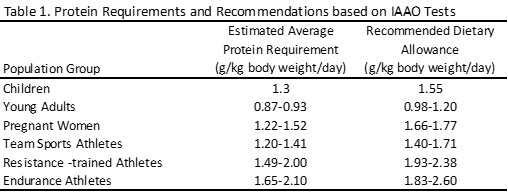
Despite its increasing popularity, the IAAO method is not without critics. One concern is that the test measures how the body handles protein over a relatively short period, mainly after eating. The amount of protein that maximizes protein use during this short period may not be the same as the amount the body needs over an entire day. Another concern is that IAAO studies are often conducted under carefully controlled conditions using free amino acids, which may not reflect how the body uses protein from ordinary foods and mixed diets.9-11
In essence, critics believe that IAAO breakpoint analysis measures maximal whole-body protein anabolism (building new proteins) rather than the minimum intake needed to maintain equilibrium.
More importantly, although the NB test has been criticized for being unable to account for the body’s adaptation when protein intake is insufficient, does the IAAO method have a similar problem but in the opposite direction? During human evolution, periods of food scarcity and famine may have shaped human physiology to absorb and store more energy than the body actually needs when food is available, as a reserve for a “rainy day.” Does this phenomenon apply to protein synthesis and muscle building in the human body? Could the human body build more tissue than it actually needs when protein intake is abundant, as a reserve for a “rainy day”? So far, no one has raised this question, let alone studied it.
So, a critical question is: Is chronically consuming protein at the maximum level estimated by the IAAO technique good for our long-term health?
3. Protein Intake — Is More Always Better?
The consequences of protein deficiency are serious and well known. On the other hand, some studies indicate overconsumption of protein can be harmful too.12-14
“Long-term consumption of any nutrients (including water, protein, and vitamin A) in high amounts may have adverse effects on human health. Protein intake greater than its safe upper limits in different age groups can exceed the ability of the liver, intestine, and kidneys to detoxify ammonia and should be avoided. Adverse effects of high protein intake include intestinal discomfort, hyperaminoacidemia, hyperammonemia, hyperinsulinemia, dehydration, irritation, nausea, diarrhea, liver and kidney injuries, fatigue, headache, seizures, high risk of cardiovascular disease, or even death.”15
A review article titled “Adverse Effects Associated with Protein Intake above the Recommended Dietary Allowance for Adults” published in ISRN Nutrition cited studies showing overconsumption of protein was associated with disorders of bone and calcium homeostasis, disorders of renal function, increased cancer risk, disorders of liver function, and precipitated progression of coronary artery disease.16
The review concluded, “Despite the fact that short-term high protein diet could be necessary in several pathological conditions (malnutrition, sarcopenia, etc.), it is evident that ‘too much of a good thing’ in diet could be useless or even harmful for healthy individuals. Many adults or even adolescents (especially athletes or body builders) self-prescribe protein supplements and overlook the risks of using them, mainly due to misguided beliefs in their performance-enhancing abilities. Individuals who follow these diets are therefore at risk.”16
Although these potential harms are plausible and likely, the methodologies used in the cited studies are generally regarded as not robust.17 In essence, the definition of high protein intake — how high is “high” for a specific population group — and its causal role in specific health outcomes are yet to be firmly established.
To be fair, assessing the health effects of high protein intake through feeding or epidemiological studies is challenging because many other confounding factors, such as intake of other food, age, level of physical activity, and health conditions can also play important roles. In any event, it should be common sense — more is not necessarily better. Let alone the fact that proteins are powerful signaling molecules that can misbehave when present in excess, breaking down unneeded protein is itself a burden on the body.
4. Does the Source of Protein Matter?
Available evidence indicates that the source of protein appears to matter. Epidemiological studies generally find that higher intake of plant proteins is associated with better health outcomes, whereas higher intake of animal proteins is associated with the opposite outcomes.18-20
Although it was not clear why many studies have found a high intake of animal proteins to be harmful, progress has been made in understanding this phenomenon.
A recent study, published in the prestigious Nature Metabolism by research teams from several universities, offers some unique insight.21 By studying both animals and humans, the researchers found that consuming over 22% of dietary calories from protein can lead to increased activation of immune cells that play a role in atherosclerotic plaque formation and may increase the risk of heart disease.
More importantly, by analyzing circulating amino acids, the study showed that leucine — one of the nine essential amino acids, rich in animal-derived foods like beef, eggs and milk — is primarily responsible for abnormal macrophage activation and atherosclerosis risk.
This is primarily a lab-based, mechanistic study with a sound methodology that minimizes confounding factors such as other nutrients in the diet. Although more studies are needed to replicate the findings, the results of this study should be taken seriously given its robust methodology. “Our study shows that dialing up your protein intake in pursuit of better metabolic health is not a panacea. You could be doing real damage to your arteries,” said senior and co-corresponding author Babak Razani, M.D., Ph.D., professor of cardiology at the University of Pittsburgh School of Medicine.
From a bird’s eye view, the findings are plausible. It is important to keep in mind that proteins are not just used for energy or bone and tissue building. Proteins are broken down in the digestive system into amino acids and peptides, which are powerful signaling molecules that modulate many physiological processes and functions in the body. For instance, GLP-1 is a peptide consisting of 30 or 31 amino acids, and insulin is also a peptide consisting of 51 amino acids.
Nevertheless, leucine is unlikely to be the sole reason that epidemiological studies find animal proteins to be detrimental to health. High animal protein intake is typically accompanied by high intake of red meat and saturated fat — most studies have also shown that both are associated with chronic diseases such as cardiovascular disease and cancer.22,23
Furthermore, although many studies have associated high intake of red meat and saturated fat with adverse health outcomes, the findings remain controversial.24,25 It is not clear whether these health effects are attributable to red meat and saturated fat themselves or, at least in part, to chemical contaminants that may accumulate in animal products. Because many environmental contaminants are fat-soluble, they can accumulate in animal tissues and fat, potentially resulting in concentrations many times higher than those in animal feed.26-28
In addition to heart disease, studies have also found that protein intake stimulates pancreatic alpha cells, which secrete glucagon, more potently than beta cells, which secrete insulin, in a dose-dependent manner.29 Unlike insulin, glucagon raises blood glucose primarily by stimulating the liver to produce and release glucose into the bloodstream. These findings raise concerns that chronically high protein intake may have adverse effects on glucose regulation, particularly in some individuals with prediabetes or diabetes.30,31
Furthermore, in animal models, lowering dietary BCAAs (branched-chain amino acids), which are more abundant in animal protein, increased energy expenditure and improved insulin sensitivity.32,33 A recent lab study in mice, published in Nutrition & Diabetes, concluded that “BCAAs per se can acutely impair glucose homeostasis and insulin sensitivity, thus offering an explanation for how they may disrupt glucose metabolism in the long-term as observed in obesity and diabetes.”34
A 2025 meta-analysis of 15 studies confirmed the association between circulating levels of branched-chain amino acids (valine, leucine, and isoleucine) in the blood and the risk of prediabetes.35
These findings are counterintuitive — many believe that reducing carbs and increasing protein intake should lower the risk of diabetes. It is true that low-carb and high-protein intake may lower blood sugar levels in the short run. But the long-term effect is unpredictable because, again, amino acids and peptides are powerful signaling molecules that may have unanticipated effects on bodily functions.
5. The Bottom Line — How Much Protein Do We Really Need?
Given that the Nitrogen Balance Test and IAAO test produce vastly different results and both are done in labs, it is hard to trust either of them at face value. Therefore, we need to look at real-life evidence. Examining the protein intake of people who live long lives can give us valuable insight.
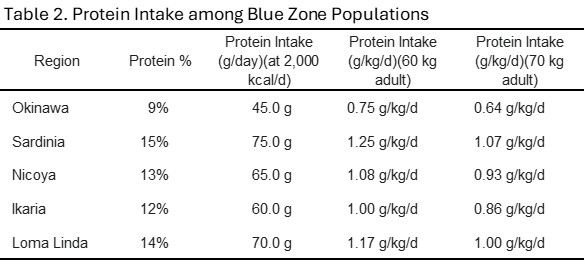
Interestingly, the world’s longest-lived populations do not consume high-protein diets. Most obtain only about 9–15% of their calories from protein, largely from plant foods. This raises an important question: if very high protein intake is essential for long-term health, why don’t we see it among populations with the greatest longevity?
As shown in Table 1 below, among the five Blue Zones, the average protein intake is 13% of total energy,36 which is equivalent to 0.975 g/kg/d.
Another good reference point is the traditional Mediterranean diet, which has been extensively studied and regarded as one of the healthiest diets around the world. The protein intake in fact is not high either and varies little across the Mediterranean region. For example, it is 13.4% of the total energy intake in Greece (~0.96 g/kg/day), and 18.5% in Italy–Rome (~1.32 g/kg/day).137
Apparently, you do not need to eat a high-protein diet for longevity. High protein intake can build big muscles, but big muscles do not necessarily translate into longevity. In fact, it is rare to see people who live long lives with big muscles.
Once you decide how much protein you want to eat, the next step is to figure out how to measure your protein intake. It is easy to figure out the amount of protein if you buy packaged food — it is on the label. If you cook or eat whole food, the USDA website provides detailed nutrition information for thousands of foods including vegetables, fruits, grains, meats, and fish.
Alternatively, you can use these rough estimates for the protein content of common foods:
One egg: 6 g
One cup of milk: 8 g
One cup of Greek yogurt: 15–20 g
Three ounces (85 g) of chicken breast: 25–30 g
Three ounces (85 g) of beef: 20–25 g
Three ounces (85 g) of pork: 20–25 g
Three ounces of fish: 20–25 g
One cup of cooked beans or lentils: 15–18 g
One ounce of nuts: 5–7 g
One cup of cooked broccoli: 4 g
One cup of cooked spinach: 5 g
One cup of cooked peas: 8–9 g
One cup of cooked corn: 5 g
One cup of cooked Brussels sprouts: 5–6 g
The Bottom Line: Although proteins are essential to life, more is not necessarily better. Real-world data suggest that, for long-term health and longevity, healthy adults should aim for a protein intake between 0.8 g/kg/day (the traditional RDA) and 1.2 g/kg/day (the lower end of the newer recommendation). If your goal is to build muscle, you may need more protein.
References
- Pruess, Manuela & Fleischmann, Wolfgang & Kanapin, Alexander & Karavidopoulou, Youla & Kersey, Paul & Kriventseva, Evgenia & Mittard, Virginie & Mulder, Nicola & Phan, Isabelle & Servant, Florence & Apweiler, Rolf. (2003). The Proteome Analysis database: a tool for the in silico analysis of whole proteomes. Nucleic acids research. 31. 414-7.
- Ponomarenko EA, Poverennaya EV, Ilgisonis EV, et al. The Size of the Human Proteome: The Width and Depth. Int J Anal Chem. 2016; 2016: 7436849. Published online 2016 May 19. doi: 1155/2016/7436849
- Deutsch EW, Lindskog C, Budnik B, et al. The 2025 Report on the Human Proteome from the HUPO Human Proteome Project. J Proteome Res. 2026;25(2):539-555. doi:10.1021/acs.jproteome.5c00759
- Adkins JN. Toward a human blood serumproteome: analysis by multidimensional separation coupled with mass spectrometry. Molecular & Cellular Proteomics. 2002; vol. 1, pp. 947–955.
- Smith LM, Kelleher NL, Proteoform: a single term describing protein complexity. Nature Methods. 2013;vol. 10(3):186–187.
- Institute of Medicine (IOM). (2005). Dietary Reference Intakes for Energy, Carbohydrate, Fiber, Fat, Fatty Acids, Cholesterol, Protein, and Amino Acids. Washington, DC: The National Academies Press. https://doi.org/10.17226/10490.
- Elango R, Ball RO, Pencharz PB. Indicator amino acid oxidation: concept and application. J Nutr. 2008 Feb;138(2):243-6. doi: 10.1093/jn/138.2.243. PMID: 18203885.
- Matsumoto M, Narumi-Hyakutake A, Kakutani Y, Tsuji M, Hatamoto Y, Higaki Y, Sasaki S. Evaluation of protein requirements using the indicator amino acid oxidation method: a scoping review. J Nutr. 2023 Dec;153(12):3472-3489. doi: 10.1016/j.tjnut.2023.07.015. Epub 2023 Aug 10. PMID: 37573015.
- Malowany JM, van Lieshout GAA, Verdijk LB, Moore DR, van Loon LJC, Trommelen J. The indicator amino acid oxidation (IAAO) technique: a novel approach to assess protein intakes that maximize whole-body protein anabolism. Crit Rev Food Sci Nutr. 2026;66(6):1172-1181. doi: 10.1080/10408398.2025.2541895. Epub 2025 Aug 1. PMID: 40748779.
- Millward DJ. Post-prandial tracer studies of protein and amino acid utilisation: what can they tell us about human amino acid and protein requirements? Br J Nutr. 2024 Jun 28;131(12):2005-2030. doi: 10.1017/S0007114524000734. Epub 2024 Apr 12. PMID: 38606599; PMCID: PMC11361918.
- Millward D. Limitations of the indicator amino acid oxidation method for determining amino acid requirements. The American Journal of Clinical Nutrition, 2025; 121, 497-499.
- Jhee JH, Kee YK, Park S, Kim H, Park JT, Han SH, Kang SW, Yoo TH. High-protein diet with renal hyperfiltration is associated with rapid decline rate of renal function: a community-based prospective cohort study. Nephrol Dial Transplant. 2020 Jan 1;35(1):98-106. doi: 10.1093/ndt/gfz115. PMID: 31172186.
- Chen Z, Glisic M, Song M, Aliahmad HA, Zhang X, Moumdjian AC, Gonzalez-Jaramillo V, van der Schaft N, Bramer WM, Ikram MA, Voortman T. Dietary protein intake and all-cause and cause-specific mortality: results from the Rotterdam Study and a meta-analysis of prospective cohort studies. Eur J Epidemiol. 2020 May;35(5):411-429. doi: 10.1007/s10654-020-00607-6. Epub 2020 Feb 19. PMID: 32076944; PMCID: PMC7250948.
- Narasaki Y, Okuda Y, Moore LW, You AS, Tantisattamo E, Inrig JK, Miyagi T, Nakata T, Kovesdy CP, Nguyen DV, Kalantar-Zadeh K, Rhee CM. Dietary protein intake, kidney function, and survival in a nationally representative cohort. Am J Clin Nutr. 2021 Jul 1;114(1):303-313. doi: 10.1093/ajcn/nqab011. PMID: 33742197; PMCID: PMC8246621.
- Wu G. Dietary protein intake and human health. Food Funct. 2016 Mar;7(3):1251-65. doi: 10.1039/c5fo01530h. PMID: 26797090.
- Delimaris I. Adverse Effects Associated with Protein Intake above the Recommended Dietary Allowance for Adults. ISRN Nutr. 2013 Jul 18;2013:126929. doi: 10.5402/2013/126929. PMID: 24967251; PMCID: PMC4045293.
- French SJ, Kanter M, Maki KC, Rust BM, Allison DB. The harms of high protein intake: conjectured, postulated, claimed, and presumed, but shown? Am J Clin Nutr. 2025 Jul;122(1):9-16. doi: 10.1016/j.ajcnut.2025.05.002. Epub 2025 May 6. PMID: 40339907.
- Huang J, Liao LM, Weinstein SJ, Sinha R, Graubard BI, Albanes D. Association Between Plant and Animal Protein Intake and Overall and Cause-Specific Mortality. JAMA Intern Med. 2020 Sep 1;180(9):1173-1184. doi: 10.1001/jamainternmed.2020.2790. PMID: 32658243; PMCID: PMC7358979.
- Naghshi S, Sadeghi O, Willett WC, Esmaillzadeh A. Dietary intake of total, animal, and plant proteins and risk of all cause, cardiovascular, and cancer mortality: systematic review and dose-response meta-analysis of prospective cohort studies. BMJ. 2020 Jul 22;370:m2412. doi: 10.1136/bmj.m2412. PMID: 32699048; PMCID: PMC7374797.
- Fan M, Li Y, Wang C, Mao Z, Zhou W, Zhang L, Yang X, Cui S, Li L. Dietary Protein Consumption and the Risk of Type 2 Diabetes: ADose-Response Meta-Analysis of Prospective Studies. Nutrients. 2019 Nov 15;11(11):2783. doi: 10.3390/nu11112783. PMID: 31731672; PMCID: PMC6893550.
- Zhang X, Kapoor D, Jeong SJ, et al. Identification of a leucine-mediated threshold effect governing macrophage mTOR signalling and cardiovascular risk. Nat Metab. 2024 Feb;6(2):359-377. doi: 10.1038/s42255-024-00984-2.
- Kim Y, Je Y, Giovannucci EL. Association between dietary fat intake and mortality from all-causes, cardiovascular disease, and cancer: A systematic review and meta-analysis of prospective cohort studies. Clin Nutr. 2021;40(3):1060-1070. doi:10.1016/j.clnu.2020.07.007
- Bellavia A, Stilling F, Wolk A. High red meat intake and all-cause cardiovascular and cancer mortality: is the risk modified by fruit and vegetable intake? Am J Clin Nutr. 2016;104(4):1137-1143. doi:10.3945/ajcn.116.135335
- Johnston BC, Zeraatkar D, Han MA, et al. Unprocessed red meat and processed meat consumption: dietary guideline recommendations from the Nutritional Recommendations (NutriRECS) Consortium. Ann Intern Med. 2019;171(10):756-764. doi:10.7326/m19-1621
- Astrup A, Teicholz N, Magkos F, et al. Dietary saturated fats and health: are the U.S. guidelines evidence-based? Nutrients. 2021;13(10):3305. doi:10.3390/nu13103305
- Fries GF. Transport of organic environmental contaminants to animal products. Rev Environ Contam Toxicol. 1995;141:71-109. doi:10.1007/978-1-4612-2542-3_3
- Jayaraj R, Megha P, Sreedev P. Organochlorine pesticides, their toxic effects on living organisms and their fate in the environment. Interdiscip Toxicol. 2016;9(3):90-100. doi:10.1515/intox-2016-0012
- Laug EP, Nelson AA, Fitzhugh OG, Kunze FM. Liver cell alteration and DDT storage in the fat of the rat induced by dietary levels of 1 to 50 p. p. m. DDT. J Pharmacol Exp Ther. 1950;98(3):268-273. doi:10.1016/s0022-3565(25)03639-0
- Claessens M, Saris WH, van Baak MA. Glucagon and insulin responses after ingestion of different amounts of intact and hydrolysed proteins. Br J Nutr. 2008 Jul;100(1):61-9. doi: 10.1017/S0007114507886314. Epub 2008 Jan 2. PMID: 18167171.
- Nagy S, Turner LV, Riddell MC. Effects of protein intake on glucagon, insulin, and glucose dynamics: implications for diabetes. Front Clin Diabetes Healthc. 2026 Jan 12;6:1712506. doi: 10.3389/fcdhc.2025.1712506. PMID: 41602572; PMCID: PMC12832353.
- Rietman A, Schwarz J, ToméD, Kok FJ, Mensink M. High dietary protein intake, reducing or eliciting insulin resistance? Eur J Clin Nutr. (2014) 68:973–9.
- Cummings NE, Williams EM Kasza I et al. Restoration of metabolic health by decreased consumption of branched-chain amino acids. J Physiol. 2017. [Epub ahead of print] https://doi.org/10.1113/JP275075.
- Bloomgarden Z. Diabetes and branched-chain amino acids: What is the link? J Diabetes. 2018 May;10(5):350-352. doi: 10.1111/1753-0407.12645. Epub 2018 Feb 13. PMID: 29369529.
- Shah H, Gannaban RB, Haque ZF, Dehghani F, Kramer A, Bowers F, Ta M, Huynh T, Ramezan M, Maniates A, Shin AC. BCAAs acutely drive glucose dysregulation and insulin resistance: role of AgRP neurons. Nutr Diabetes. 2024 Jun 6;14(1):40. doi: 10.1038/s41387-024-00298-y. PMID: 38844453; PMCID: PMC11156648.
- Wang Y, Xiao JH, Zhang XM, Wang WX, Zhang Q, Tang YP, Yue SJ. Association of circulating branched-chain amino acids with risk of pre-diabetes: a systematic review and meta-analysis. PeerJ. 2025 Sep 25;13:e20054. doi: 10.7717/peerj.20054. PMID: 41025050; PMCID: PMC12476861.
- https://nutrola.app/en/blog/blue-zones-diet-breakdown-what-centenarians-actually-eat-macro-data
- Karamanos B, Thanopoulou A, Angelico F, et al. Nutritional habits in the Mediterranean Basin. The macronutrient composition of diet and its relation with the traditional Mediterranean diet. Multi-centre study of the Mediterranean Group for the Study of Diabetes (MGSD). Eur J Clin Nutr. 2002 Oct;56(10):983-91.